
Why I'll never ditch my BlackBerry
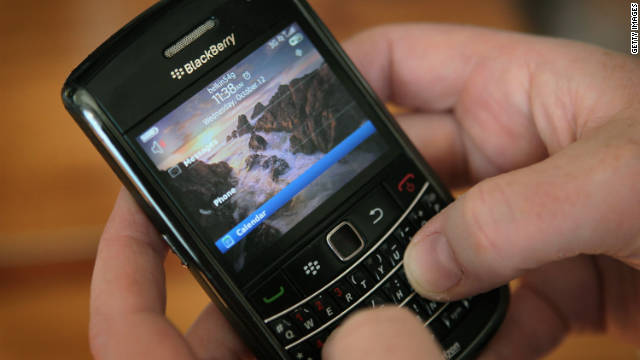
BlackBerry diehards like Ronen Halevy prefer the phones' security and physical keyboard.
STORY HIGHLIGHTS
- Ronen Halevy is an information-security specialist who has owned a BlackBerry since 2005
- Despite the rise of flashier rival phones, he prefers BlackBerry's efficiency at e-mail
Halevy: "BlackBerry puts my security first"
Editor's note: Ronen Halevy is founder and editor of BerryReview.com
and has been covering BlackBerry and the mobile space since 2007. He is
an avid technologist with experience in information security and
enterprise IT and is usually active on Twitter.
(CNN) -- My BlackBerry is my lifeline.
My love story began with
the 7290 model in 2005. With its blinking red notifications and QWERTY
keyboard, it turned heads with intuitive and secure communication
offered in an indestructible package.
Since then, I have not missed an upgrade as the BlackBerry brand defined what we now call the smartphone market.
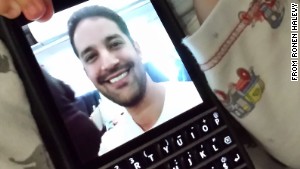
Ronen Halevy
It seems like only
yesterday that I was riding the subway, surrounded by Type A New Yorkers
punching away at their BlackBerrys. A constant companion for
executives, the device was a status symbol.
But the years since have
brought a string of disappointments for hyperconnected BlackBerry users
like me, as the company tried dating out of its league. It lost focus on
what made me fall for my CrackBerry in the first place.
You see, BlackBerry was
trying to be something it wasn't. BlackBerry was the reliable but
unassuming Volvo of smartphones. When it tried to compete head-on with
the flashier Corvette, it began to unravel.
Over the years, as each
of my friends moved to iPhone or Android, I noticed that they no longer
replied from their mobiles because it was a chore. This is a symptom of
platforms that put content consumption over creation. In other words,
those phones were fine for reading blogs or watching video, but they
were not so good at sending e-mails.

A history of Blackberry in 93 seconds

BlackBerry battles for survival
Soon enough, I was forced
to carry an Android phone as well, as BlackBerry was slow to adopt
3G/4G connectivity and other ancillary features. But I could not forgo
BlackBerry's core competency of efficient communication. I've worked in
information security for years, and I place a high value on the
encryption and secure communication baked into each BlackBerry device.
In an age where companies are turning your personal life into an open book, BlackBerry puts my security first.
The easiest way to
describe what makes BlackBerry communications special compared with
Android and iOS is the universal inbox called "The Hub" on BlackBerry
10, the phones' latest operating system. In one screen, BlackBerry lets
you view and search every single communication service you have on your
phone, AND it lets you act on them without opening another application.
That means my e-mail,
Twitter, IM/BBM, Facebook, calendar, notifications and more are all in
one place. On Android and iOS I would be viewing my latest notifications
and then opening each separate app to respond.
BlackBerry's current CEO, Thorsten Heins, promised to refocus the company on "hyperconnected multitasking achiever people"
like me when he took the helm in 2012. BlackBerry 10 managed to
rekindle this core competency while offering a platform that was
cutting-edge and offered a larger catalog of top shelf apps.
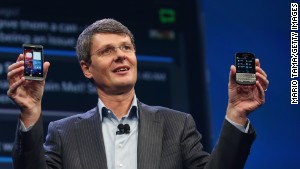
BlackBerry CEO Thorsten Heins displays the new Blackberry 10 smartphones at a launch event in January.
Sadly, most of the
former BlackBerry users I hear from do not realize that BlackBerry 10 is
a whole new platform that addresses most of the shortcomings (no
browser, shortage of apps, etc.) that led them to abandon BlackBerry in
the past. This is where Heins and his executive team failed. The cloud
of doom and uncertainty that they leave hanging over the company also
keeps potential adopters away from BlackBerry 10.
Now, when people see me
carrying my new Q10 phone, they are surprised that BlackBerry is still
around. And when l pull out my BlackBerry in public, I feel the need to
defend it. (I still carry an Android device as well.)
BlackBerry 10 is a
promising platform, but it has not reached the market penetration
required to convince companies like my bank, Chase, to release an app
for me to cash checks. This is the inherent problem with the situation
BlackBerry finds itself in.
Between strong iOS and
Android offerings and BlackBerry's poor job of marketing, people know
almost nothing about what BlackBerry 10 offers and how it differs from
older BlackBerrys they were given years ago at work. Many people are
surprised to learn that BlackBerry actually has a competitive
touchscreen smartphone.
BlackBerry's latest financial woes and the uncertainty of Fairfax Financial taking the company private
has created more anxiety for those of us still clinging to our
BlackBerrys. For future owners of BlackBerry to have any chance of
success, they must stop trying to compete directly with other platforms
and instead focus on why us hyperconnected, multitasking achievers
should choose them instead.
I truly hope they succeed.
The views expressed in this commentary are solely those of Ronen Halevy.
-
Let’s Be Honest About Israel’s Nukes (The New York Times)
-
Apple iOS 7’s Biggest Design Problem (BusinessWeek)
-
As Apple’s New iPhones Arrive, Google Is Having A Very Bad Day (Tech and Gaming 24/7)
-
Airline loses husband’s ashes (Philly.com)

Today's five most popular stories


From Around the Web


No comments:
Post a Comment